
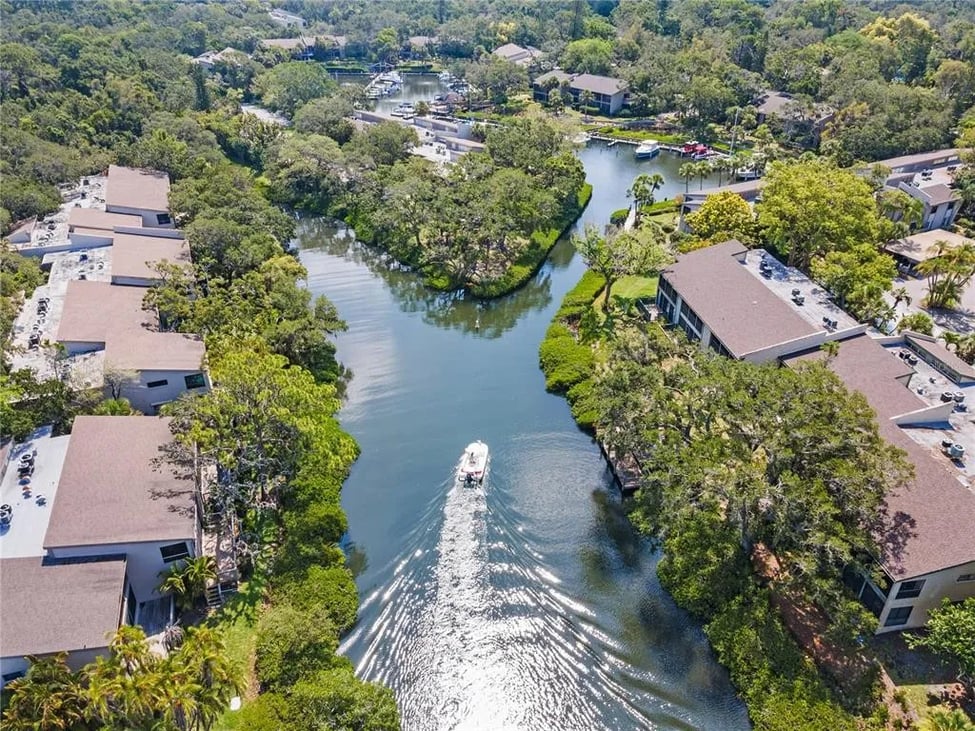
Week of January 4-11
Quick Take:
If you’re hearing that Siesta Key is “moving again,” that’s true in parts and misleading in others. Sales are happening, but only where buyers feel protected.
Why This Report Exists
This weekly snapshot looks at what actually traded on Siesta Key over the past seven days and how buyers behaved in response. It is not a forecast or a promotional piece. It is a clear-eyed read on where deals got done, where they stalled, and what that reveals about current risk tolerance.
Over time, these weekly observations are analyzed collectively to identify emerging trends, what is changing, what is holding steady, and which signals matter versus those that do not.
The One Thing That Mattered This Week
Liquidity is real, but it is uneven.
Transactions occurred where pricing, risk, and expectations aligned. There is no broad-based momentum across the island. What exists instead is selective execution in narrow lanes where buyers felt confident about what they were buying and what they were not.
Where Buyers Stepped In
Condos continue to act as the market’s pressure valve.
Most activity clustered in buildings that offered:
Predictable HOA structures
Clear and stable rental rules
Known post-storm and post-insurance outcomes
The most consistent engine remained the $500K-$900K condo band. Buyers in this range were disciplined and analytical, often replacing or reallocating capital rather than purchasing emotionally.
In plain terms: when expectations were realistic, deals moved forward.
Where Buyers Hesitated
There was no meaningful spillover beyond those lanes.
Premium condo sales did occur, but they were isolated:
Beachfront or legacy buildings
Often off-market or priced exactly to current market reality
These sales did not reset values for surrounding units or buildings.
Single-family homes showed similar selectivity. Closings were infrequent and highly contextual, typically tied to elevation, flood mitigation, or defensible waterfront uniqueness. Average homes with average risk at optimistic prices did not clear.
What It Took to Get a Deal Done
Many of this week’s closed sales required:
Extended market exposure
Multiple price adjustments
Re-anchoring seller expectations
Closed transactions should not be interpreted as proof of market strength. They reflect alignment—often after patience and repricing met disciplined demand.
What Buyers Were Really Asking
The Question Buyers Kept Asking (Explicitly or Not):
“What protects me if something changes again?”
That question continues to drive pricing tolerance more than seasonality, lifestyle, or headline-driven optimism.
Trend Watch (Early Signals Worth Noting)
This is not a declaration of a new trend, but several patterns are becoming more consistent:
Condos are increasingly functioning as the market’s release valve, particularly in buildings where risk has already been absorbed and clarified.
Buyer discipline in the mid-range price bands is holding firm, with little tolerance for pricing that assumes future improvement rather than current reality.
Premium sales are being treated as exceptions, not signals, suggesting buyers are separating uniqueness from general market direction.
Time on market is quietly lengthening in segments where pricing has not adjusted, reinforcing patience as a buyer advantage.
These are patterns to watch—not conclusions to rush.
What Looked Important (But Wasn’t)
Signal:
Consistent clearing in select condo price bands
Buyers rewarding clarity, transparency, and pricing accuracy
Noise:
Isolated high-end sales
Assumptions that activity equals appreciation
The idea that scarcity alone creates leverage
How to Read This Week
This week reinforces a broader reality. Siesta Key is not experiencing a rising tide. It is experiencing selective execution.
Correct pricing is rewarded with completion, not competition. Pricing errors are punished with time rather than outright rejection.
The more useful question remains:
Why did this property feel safe to a buyer?